
When your garage door stops working at the worst possible time, it is not just inconvenient. It can put your family’s safety, your schedule, and your business operations at risk. In those moments, fast and professional garage door repair is the only sensible choice. At Magnum Garage Door Service, Inc., our expert team serves Aldine, TX, and the surrounding Greater Houston communities with responsive, organized, and safety-first emergency service. Over the years, we have helped homeowners get to work on time after a stuck door and helped business owners protect inventory after an after-hours opener failure. What we have learned is simple: in an emergency, the order of operations matters.
Here is a recent example. A customer called early in the morning because their door dropped to the halfway point and would not move. They heard a loud bang in the night. We arrived, secured the door to prevent it from falling, and completed a thorough inspection. The root cause was a broken torsion spring and frayed lift cable. By prioritizing safety, stabilizing the door, and replacing matched springs and cables, we restored smooth, quiet operation that same morning. The homeowner could leave for work, and their home was secure again.
Emergencies are common. Heavy doors, worn parts, and daily use can lead to failures. Many costly accidents happen when people try to do-it-yourself fixes with springs or cables under high tension. The best path is to call trained technicians who follow a clear checklist. In this guide, we will show you what professionals focus on first, why each step matters, and how you can help before we arrive.
What Counts as a Garage Door Emergency?
Not every issue is an “emergency,” but some conditions require immediate attention because they threaten safety, security, or business operations.
Common emergencies
- The door is stuck open and will not close, leaving your home or business exposed.
- The door is stuck closed, trapping a vehicle inside when you need to leave.
- You heard a loud “bang,” and now the door feels very heavy or will not move.
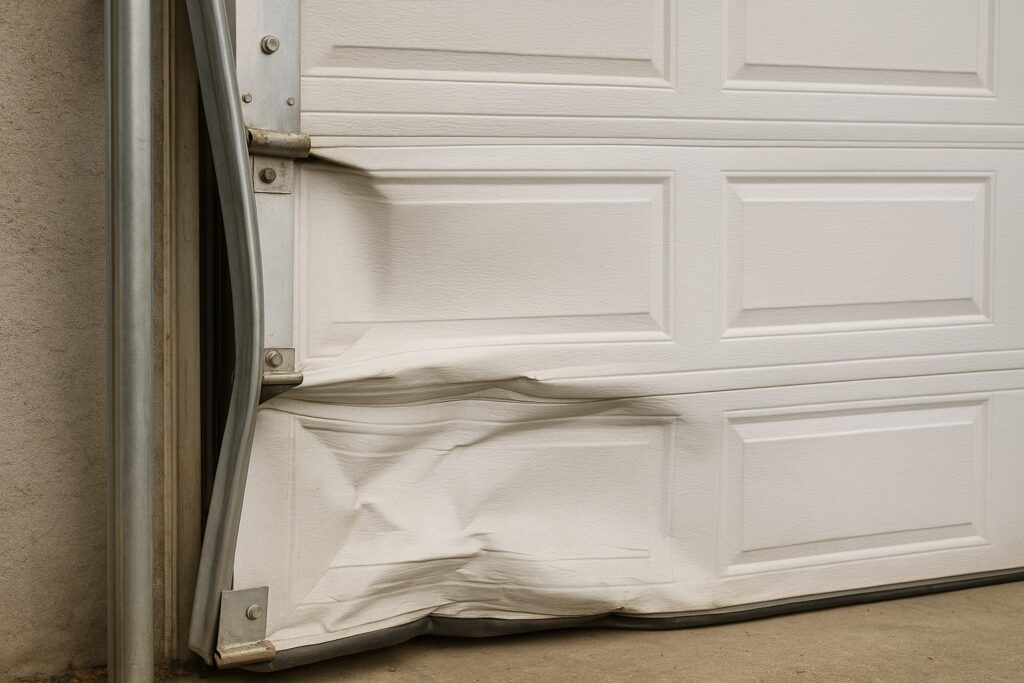
- The door is crooked or off the track, or you see a loose or broken cable.
- The opener runs, but the door will not move, or moves and then reverses.
- A vehicle or forklift hit the door, bending panels or tracks.
- A power surge or lightning storm caused the opener or sensor failure.
- A commercial overhead or roll-up door jammed during loading hours.
- A gate operator failed, blocking entry or exit for residents or deliveries.
If any of these happen, treat it like a “stop now” situation and call right away. The faster we stabilize the door, the easier and more affordable the repair usually is.
Technician Triage: The First Priorities in an Emergency
When we arrive for emergency service, our trained technicians follow a proven sequence. The steps are simple but very important.
1) Safety First
Before we touch anything, we make sure the door cannot move unexpectedly. A typical double garage door can weigh 150 to 300 pounds or more. An off-balance or off-track door can fall. To keep everyone safe, we:
- Disconnect power to the opener.
- Secure the door in place with locking pliers or clamps on the track.
- Confirm that no one walks under a suspended door.
- Evaluate spring tension and cable condition before loosening any hardware.
Why it matters: Safety steps prevent injuries, protect your car, and avoid extra damage to panels, tracks, and openers.
2) Root-Cause Diagnosis
We perform a thorough inspection to find the true source of the failure, not just the symptom you see. Our inspection includes:
- Springs: torsion or extension, looking for gaps, rust, deformation, or broken cones.
- Cables: fraying, slack, or breakage at the bottom bracket or drum.
- Tracks and rollers: bending, misalignment, debris, worn roller bearings.
- Hinges and brackets: cracks, missing fasteners, loose carriage bolts.
- Panels: dents, cracks, or water damage affecting balance.
- Opener system: gear and sprocket wear, limit settings, force settings, and sensor alignment.
- Safety sensors: obstructions, misalignment, wiring damage, or sun glare interference.
- Door balance: manual lift test with the opener disconnected.
Why it matters: Accurate diagnosis saves time and money. Replacing only the right parts results in a more reliable repair.
3) Stabilize and Secure
If the door is crooked or off the track, we realign rollers, adjust tracks, or remove damaged parts before putting anything under load. If a cable snapped, we relieve spring tension safely and replace the cable set. Stabilizing first prevents the door from moving suddenly while we work.
Why it matters: Securing the door prevents a minor problem from turning into major damage.
4) Repair the Core Failure
We then fix the root cause. Common emergency fixes include:
- Broken torsion or extension springs: We install matched, high-cycle springs sized to your door’s weight and height, then set correct tension. Replacing springs in pairs keeps the balance even.
- Snapped or frayed cables: We install new lift cables and bottom brackets if needed, then re-drum and tension them.
- Off-track doors: We true the track, install new rollers if the bearings are worn, and check for bent track sections that need replacement.
- Damaged panels: We repair if possible or replace the panel. For heavy impact, a new garage door may be more cost-effective.
- Opener failure: We service gears, sprockets, belts, and limits. If the motor is failing or outdated, we recommend a modern opener with safety and smart features.
5) Calibrate, Lubricate, and Test
After the repair, we do precision adjustments:
- Set the correct spring tension so the door stays balanced at mid-travel.
- Align tracks to the correct spacing so rollers glide smoothly.
- Clean and lubricate rollers, hinges, and bearings with the right product.
- Set opener travel and force limits.
- Align and test safety sensors.
- Run multiple open-close cycles to confirm quiet, smooth operation.
Why it matters: Fine-tuning is the difference between a repair that “works today” and a repair that stays reliable.
The Most Common Emergency: Broken Springs
Springs carry the heavy lifting. When they fail, you will notice it right away.
Signs your spring broke
- You hear a loud snap or bang in the garage.
- The door will not lift, or it rises a few inches and drops.
- The door feels extremely heavy during manual lift.
- You can see a visible gap in a torsion spring.
How do we fix it
- We measure the door and hardware to match the correct wire size, inside diameter, and length.
- We install a pair of springs when the system is designed for two, which keeps the balance even and reduces strain.
- We set the proper number of turns for tension.
- We replace worn center bearings or end bearing plates when needed.
- We test the balance and adjust until the door stays at mid-height without drifting.
Tip: Springs have a service life measured in cycles. Consider high-cycle springs if your family uses the door as a main entry many times per day. High-cycle springs extend the time between replacements.
Opener Emergencies and What To Expect
Openers are smart and convenient, but they cannot lift a heavy, unbalanced door safely. Many “opener problems” turn out to be spring or balance problems.
Quick checks you can do
- Make sure the opener has power, and the breaker has not tripped.
- Replace the remote batteries and try the wall button.
- Clear objects from the path of the safety sensors and wipe the lenses.
- Look for blinking lights on the opener head that indicate a sensor or travel issue.
How we handle opener issues
- We check limits, force, and travel. If limits drifted, we reset them.
- We inspect gears, sprockets, belts or chains, trolley, and rail alignment.
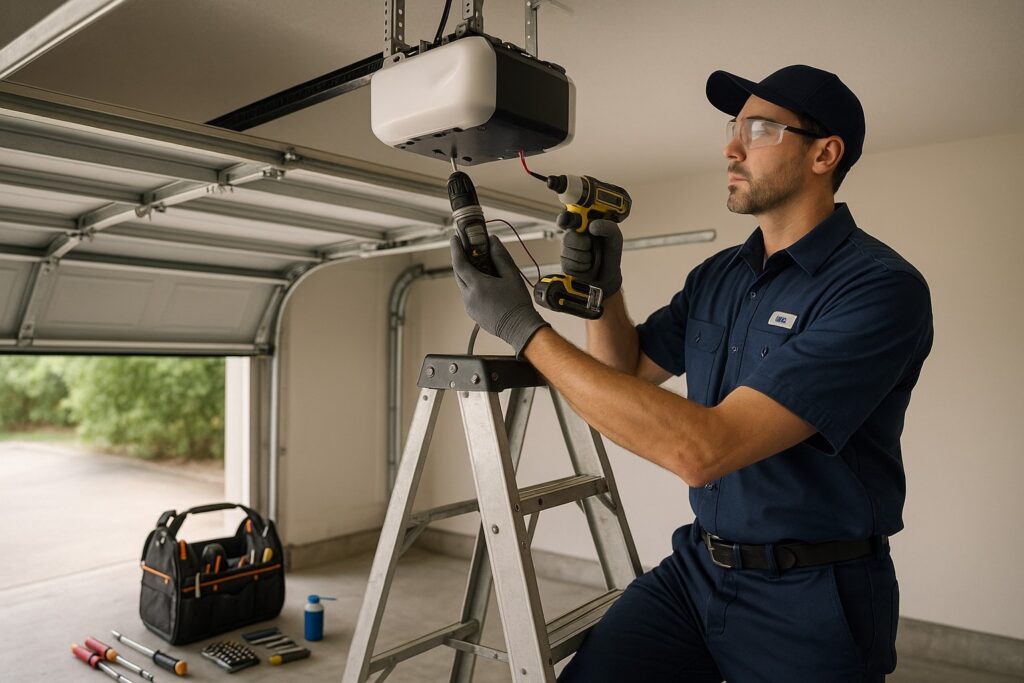
- For older units with worn motors or damaged logic boards, we recommend a modern opener with rolling code security, soft start/stop, and battery backup so you can still open the door during an outage.
Brands and compatibility
Our technicians service a wide range of opener brands and models, including many popular units in homes and shops across Greater Houston. If you have a Craftsman-style residential unit or a commercial trolley operator, we will guide you on the best repair or replacement path.
Off-Track and Crooked Doors: Why They Happen
A crooked door means something allows one side to drop or rise unevenly.
Typical causes
- A cable jumped the drum or snapped.
- A roller broke, or the bearing seized.
- A bracket cracked or pulled away from the panel.
- The track was bent by a vehicle, bike, or trash can impact.
- Debris in the track caused a jam.
How we fix it
- We secure the door in place so it cannot drop.
- We relieve spring tension and reset cables on the drums.
- We replace damaged rollers and brackets, true the track, and check the vertical and horizontal alignment.
- We confirm that the door is square in the opening and that headroom and backroom clearances are correct.
- We then re-tension the springs and test travel several times.
Tip: Never pull the emergency release on a crooked or stuck-halfway door. The door can slam down. Wait for a technician to stabilize it.
What You Can Do Before We Arrive
While you should never work on springs or cables yourself, there are safe steps you can take to help.
Simple, safe actions
- Keep people and pets away from the door.
- If the door is stuck open, avoid standing under it.
- Do not force the door with the opener. This can strip gears or bend the rail.
- If you must secure a stuck-open door for security and it is safe to do so, you can place a sturdy 2×4 under the door as a temporary block and avoid walking under the opening.
- Make sure the driveway is clear so our service truck can park near the door.
- Gather basic information: when the problem started, any noises you heard, any blinking codes on the opener, and the door’s approximate age.
Information to tell our dispatcher
- Address and best contact phone number.
- Whether a vehicle is trapped.
- Whether the door is open, closed, or stuck halfway.
- Any visible damage, like a broken spring or hanging cable.
- Any access limitations, such as a locked side gate.
The more details you provide, the faster we can help.
Commercial Emergency Priorities
If you run a business, downtime is expensive. A stuck commercial garage door or gate can block deliveries, delay production, and affect safety.
Common commercial situations
- Sectional overhead door is stuck at the dock with a trailer waiting.
- Rolling steel door jammed due to a bent slat or chain failure.
- High-cycle spring failure in a high-traffic bay.
- Gate operator failure traps vehicles at the entry or exit.
- The fire door drops after the alarm, which will not reset.
Our commercial approach
- We coordinate arrival times to minimize disruption.
- We bring heavy-duty parts and hardware suited to industrial use.
- We make temporary safe-to-operate repairs fast, then schedule follow-up installation services if full panel or curtain replacement is needed.
- We offer planned maintenance services to reduce emergency calls in the future.
Tools and Parts Technicians Bring to an Emergency Call
Well-equipped service trucks allow fast, same-day solutions.
On-truck essentials
- A range of torsion and extension springs for common door sizes.
- Cables, drums, center bearings, end bearing plates, hinges, rollers, and fasteners.
- Track repair tools and replacement sections.
- Opener parts: belts, chains, trolley assemblies, sprockets, limit switches.
- Electrical test tools for sensors and controls.
- Specialty bars and winding tools to handle spring tension safely.
- Lubricants and cleaners suited for garage door hardware.
Why it matters: With the right parts on hand, we complete most emergency repairs in one visit.
Preventive Maintenance: The Best Way to Avoid Emergencies
Many emergencies begin as small issues. Regular maintenance catches wear early.
Simple homeowner maintenance
- Wipe debris from tracks.
- Lightly lubricate hinges and rollers with a garage-safe product every few months.
- Keep sensor lenses clean and aligned.
- Watch and listen for scraping, grinding, or popping sounds.
Professional maintenance services
- Annual or semi-annual inspection and tune-up.
- Spring balance test and adjustment.
- Tightening of hardware and replacement of worn rollers or hinges.
- Opener force and travel calibration.
- Full system safety check.
Maintenance schedule suggestion
- Quarterly: visual check and light lubrication.
- Annually: professional tune-up and safety inspection.
- High-use doors: consider high-cycle springs and a 6-month professional check.
Repair or Replace? Making a Smart Decision
Sometimes a repair is the best value. Other times, a new garage door or opener is smarter.
Repair makes sense when
- The door is in good overall condition, and the problem is a single part, such as a broken spring or cable.
- The opener is modern, and the issue is a minor adjustment or a small part.
- The panel damage is cosmetic and can be fixed or replaced individually.
Replacement makes sense when
- Panels are rotted, severely bent, or the door is very old and uninsulated.
- Multiple parts are worn out, making future breakdowns likely.
- You want better insulation, updated style, or improved security.
- Your opener lacks safety features or shows repeated board or motor failures.
Benefits of a new garage door
- Fresh curb appeal and higher resale value.
- Better energy efficiency in attached garages.
- Quieter, smoother operation with new hardware.
- Stronger weather sealing to keep out dust and moisture.
Our team can price both options during the same visit, so you can choose what fits your needs and budget.
Cost Factors and Time Expectations (No Surprises)
Every job is different, but here are factors that influence cost and time:
- Door size, weight, and construction.
- Type of spring system and whether parts are standard or specialty.
- Extent of track or panel damage.
- Commercial versus residential hardware.
- Urgency and time of day.
We provide clear pricing before work begins and explain your options. Our goal is a reliable, safe solution with no surprises.
A Quick Homeowner Checklist for Emergencies
- Is the door open, closed, or stuck halfway?
Do you see a broken spring or loose cable? - Did you hear a loud snap or bang?
- Is the opener light blinking when you try to close?
- Are the sensor lights on and aligned?
- Is anyone or anything under the door? Move everyone clear.
- Call Magnum Garage Door Service, Inc. and share these details.
Practical Do’s and Don’ts
Do
- Call professionals at the first sign of trouble.
- Keep kids and pets away from a stuck or crooked door.
- Schedule regular maintenance to prevent surprise failures.
- Ask for high-cycle springs if your family uses the door frequently.
- Consider a battery backup opener for storm seasons.
Don’t
- Don’t loosen, wind, or adjust springs or cables yourself.
- Don’t keep running the opener if the door will not move.
- Don’t stand under an open, stuck, or crooked door.
- Don’t ignore scraping or popping sounds. They are early warnings.
Frequently Asked Questions (FAQs)
Q1. How long does a typical emergency garage door repair take?
Most emergency repairs can be completed in a single visit if the technician arrives prepared and the required parts are on hand. However, if a part needs to be ordered or additional structural damage is found, the job may be split into an immediate stabilization visit followed by a full repair.
Q2. Will emergency garage door repair cost more than a standard repair?
Yes — emergency calls often include higher fees because they involve after-hours responses, quicker scheduling, or long travel. Many companies apply a surcharge for nights, weekends, or holidays.
Q3. Does the age of my garage door affect how quickly it can be repaired?
The age can influence repair time because older systems may have discontinued parts or wear-and-tear that complicates the job. A newer door with standard components usually allows a quicker diagnosis and faster repair turnaround.
Q4. Can an emergency repair affect my garage door’s warranty?
It depends on the terms of your warranty and whether the repair was done by a certified professional using approved parts. Always ask the service company to document any work done and confirm whether the warranty remains valid post-repair.
Why Choose Magnum Garage Door Service, Inc
- Experienced technicians: Our team brings years of hands-on experience with residential and commercial doors.
- Quality parts: We use durable hardware designed for smooth operation and long service life.
- Clear communication: We explain what failed, how we will fix it, and how to avoid repeating problems.
- Fast response: Emergency calls receive priority scheduling.
- Customer-first service: We treat your home or business like our own.
Whether it is a late-night spring break, an early-morning opener failure, or a midday off-track emergency, we will get you moving again.
How Can Magnum Garage Door Service, Inc. Help You?
If your garage door is stuck, crooked, noisy, or unsafe, call us now. Our expert team can secure the door, find the cause, and complete a reliable repair that protects your family, your time, and your property. We handle residential and commercial garage doors, garage door openers, gates, and more. From emergency fixes to regular maintenance and full installation services, we are ready to help today.
Magnum Garage Door Service, Inc.
📍 Address: 10495 Northwest Fwy, Houston, TX 77092
📞 Phone: (281) 326-6766
Contact us to schedule your garage door repair appointment or same-day emergency service. Tell us what you are seeing, and our skilled technicians will arrive prepared. Your door will be safe, smooth, and reliable again—fast.